Cooling Farm and Fountainhill Estate, KZN Midlands
SASTA members were treated to insights into two fascinating operations in the KwaZulu-Natal Midlands on 25 February 2026. Kiwis and avocados were on the menu for the day, and both farms kept our members spellbound as we learned about some of the intricacies of producing these crops.
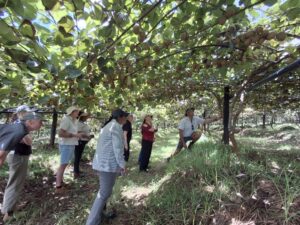
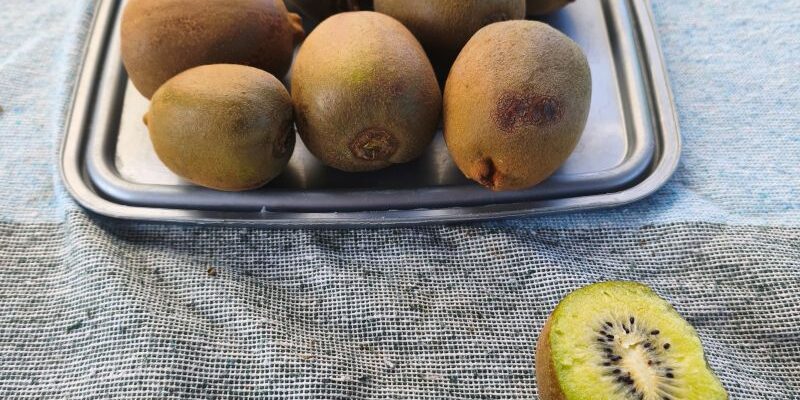
We kicked off with a visit to Cooling Farm, near Bruyns Hill, where owner Ralph Eggers took us through his journey of selecting, planting, and managing golden kiwis. This superfood is grown by a select group of farmers in South Africa, and we couldn’t have found a more different crop to sugarcane. SASTA members were fascinated by the trellis setup, all under shade cloth, and the attention to detail required to produce this vine fruit.
Just two of the facts learned during the day were that kiwis are dioecious, i.e. with separate male plants (for pollination) and female plants (which bear the fruit), and that pollination is carried out both by bees and by hand over a two-week period. Kiwi flowers are not usually a first choice for bees to visit, so beekeepers use special techniques to encourage the bees to visit the flowers. To ensure success, after the bees have done their work, male flowers are manually plucked and used to ‘kiss’ the female flowers, ensuring uniform pollination and fruit set.
The fruit is harvested over an intensive three-day period in March and exported to the Middle East and Europe.
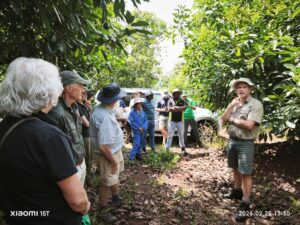
Next, we visited Fountainhill Estate in nearby Wartburg, where Ed Gevers gave us an introduction to this extraordinary establishment. Boasting 1,600 hectares of conservation land, the estate also produces sugarcane and avocados, hosts guests in various accommodation options, and supports a wide array of research efforts, including university studies and an annual research symposium.
Ed took us through their avocado orchards and shared the realities of producing a crop while facing challenges such as pests, diseases, the selection of appropriate varieties and rootstock, and effective pruning practices. His refreshing honesty highlighted both the lessons learned (‘school fees’) and the innovations developed in response to the inevitable challenges of farming.
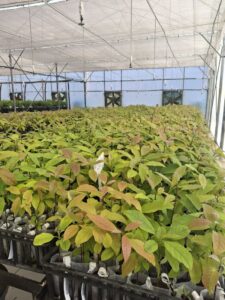
Finally, Michaela Ueckermann led us through Fountainhill’s clonal avocado nursery. Michaela had laid out a sequence of the various stages that a seedling goes through in the nursery and explained each step in a clear and engaging way. Avocado seedlings are complex. After growing a plantlet from an avocado pip (the large seed found in the centre of the fruit), the top shoot is removed, and a rootstock variety is grafted on. This provides a strong root system for the eventual plant but does not produce desirable fruit.
The plant is then etiolated (made pale by withholding light) in a dark room for about a month and encouraged to produce roots from its lower stem using rooting hormone and soil packed around the stem. Once rooted, the top is removed again and the final variety, which will produce high-quality fruit, is grafted onto the plant. Finally, once the top variety has grown and the rootstock produces healthy roots, the original nurse seed (the avocado pip) is removed, and the seedling is ready for hardening off.
Fountainhill is accredited by the Avocado Nurserymen’s Association, and each seedling is barcoded, allowing complete traceability of its development.
A very big THANK YOU to Ralph, Ed, and Michaela for hosting us, and additional heartfelt thanks to Janet Edmonds and Joleen Torlage (both from the South African Sugarcane Research Institute Extension, Midlands North) for their assistance with everything from grower liaison to coffee, gazebos, and catering.
To our members — if you missed the day, be sure to join us for our next field trip, which will be advertised soon.