Visit to Ilembe Foundry
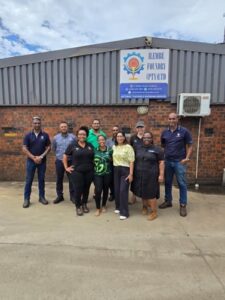
SASTA members were treated to an insightful visit to Ilembe Foundry in March. By our own admission, many of us were unsure what to expect, and we were thoroughly fascinated by the processes we observed.
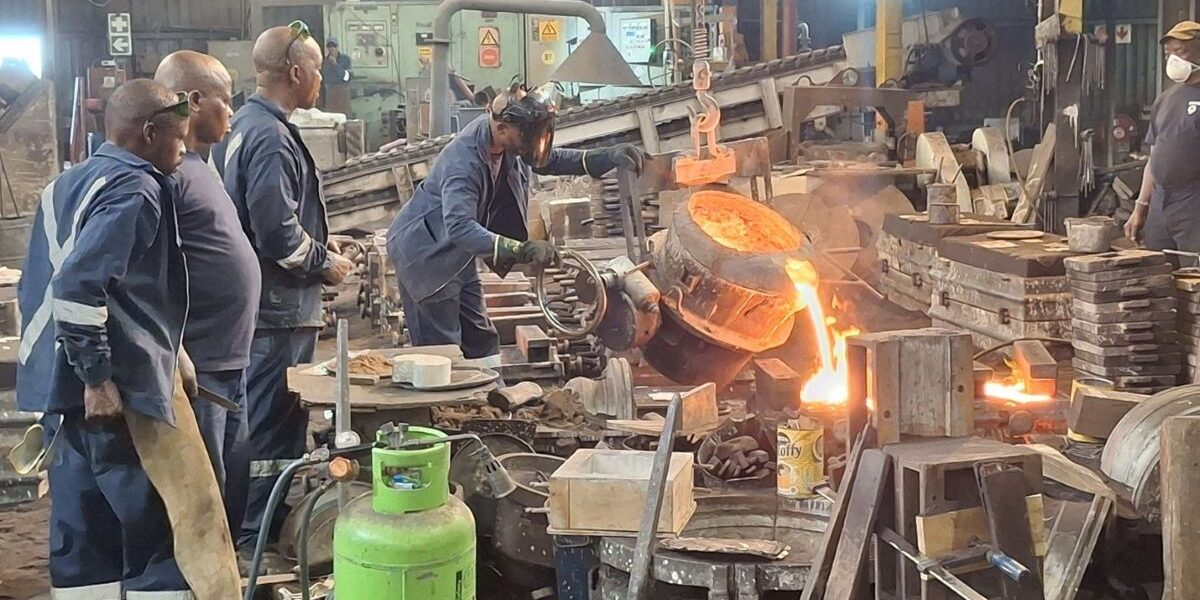
For those unable to attend, a foundry is a factory where metal is melted and poured into custom-made moulds to produce a wide range of items, including boiler parts, large gear wheels, bearings, and grate bars.
Ilembe Foundry will celebrate its 49th anniversary later this year. The company began as Zululand Foundry, later becoming Inkunzi Foundry, before adopting its current name when Raymond Keman took ownership eight years ago. Originally established to manufacture large castiron cooking pots, the direction of the business changed following a visit from a Tongaat Hulett Sugar employee, who brought in a drawing of a sugar mill component and asked whether it could be produced. Before long, components for sugar factories became a core focus of the business, with cooking pots now produced only on special order.
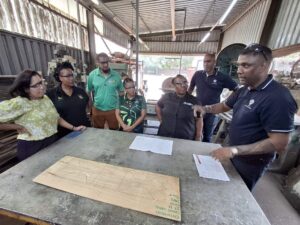
Customers can provide either a technical drawing or an existing component, from which patternmakers create a replica using wood. Specially treated sand is then packed around the wooden pattern within a moulding box. Once the sand has set and hardened, the pattern is removed, leaving a cavity into which molten metal is heated to over 1400°C and poured. The composition of the metal is carefully controlled by the metallurgist, who adjusts elements such as silicon, carbon, manganese, and magnesium to achieve the required grade. The foundry can produce 87 different metal grades. Visitors also learned that cast iron typically contains around 3% carbon, while steel contains less than 1%. Once cooled, the cast items are sent to the company’s nearby subsidiary, NVT Engineering, where they are machined, polished, and finished to precise specifications.
This proudly South African company, together with three other foundries in KwaZulu-Natal, uses locally sourced materials, and can manufacture most of the components required by South African (and neighbouring) sugar mills. In addition, the foundry produces parts for agricultural equipment, such as tractor tow hitches. The company employs more than 45 permanent staff and offers apprenticeship programmes for patternmakers and moulders.
A sincere thank you to Raymond, Keegan, Anand, Rishen, and the entire Ilembe team for their exceptional hospitality. We wish you continued success as you serve the sugar industry and the broader southern African region.
Ilembe Foundry is a regular exhibitor at the annual SASTA Congress. Be sure to visit their stand or contact Keegan Moonoosamy (keegan@ilembefoundry.co.za / 084 592 9240) to arrange a visit.