
John Pickering
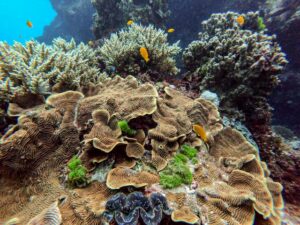 My mind wanders over to the coast of Queensland, Australia. I dream of the many multicoloured underwater plants and creatures that inhabit the world’s largest coral reef. I have read somewhere that the Great Barrier Reef is so large that it can be seen from outer space. I mentally add it to my bucket list of places to visit.
A major threat to this natural wonder of the world is the pollution emanating from farming operations in the region. Water run-off from agricultural land carries chemical nutrients, herbicides and pesticides which pose a health risk to coral life. Enter Behavioural Scientist, Dr John Pickering, an expert in systems level-thinking and behaviour change frameworks. John is the keynote speaker at this year’s online SASTA Congress, and he speaks enthusiastically about endeavours to alleviate this environmental crisis.
For the longest time, sugarcane farmers in Queensland were seen as the culprits causing harm to the reef. Government and the public brought immense pressure to bear on these farmers to adopt sustainable Best Management Practices (BMPs) as documented in the SMARTCANE BMP programme. Adoption by farmers, however, was low. John Pickering and his team from the behavioural science company, Evidn, were brought in to facilitate change. The team has vast experience in working with communities to bring about change at a national level, and they firmly believe that most of the problems in agriculture (or any other industry) are “people problems”.
Through the aptly named Project Cane Changer, John and his team conducted a behavioural systems analysis of the situation, and then set up processes involving various industry stakeholders. Much effort was directed at understanding resistance to change, i.e., the group did not focus only on what motivated change, but also examined obstacles to change. In the case of sugarcane farmers, the resistance to change was the feeling of being vilified and portrayed incorrectly. They considered themselves to be innovative and committed to sustainable practices. Many were already engaging in correct practices on their farms.
Project Cane Changer helped to correct public perceptions of sugarcane farmers. Assistance was provided in establishing record-keeping systems, so that farmers could document and demonstrate sustainable practices on their farms. An accreditation system was implemented to recognise participating farmers and to accelerate adoption of BMPs.
The success of Project Cane Changer is unquestionable. In one region, SMARTCANE BMP adoption (and accreditation) increased by an astounding 509% since Project Cane Changer commenced in 2016. The project has since been extended to several regions in Australia, and the model has also been replicated in maize farming enterprises in America.
Dr John Pickering was initially scheduled to visit South Africa last year, courtesy of a SASTA grant. The intention was to run workshops in the sugar industry to demonstrate how the science of human behaviour can be used to tackle major industry issues. Unfortunately, Covid-19 scuppered those plans, and the workshops have been postponed to this year, when we can look forward to exploring behavioural science solutions to our very own brand of “people problems”.
by Poovie Govender
SASTA Council Member
Knowledge Products Specialist, SASRI